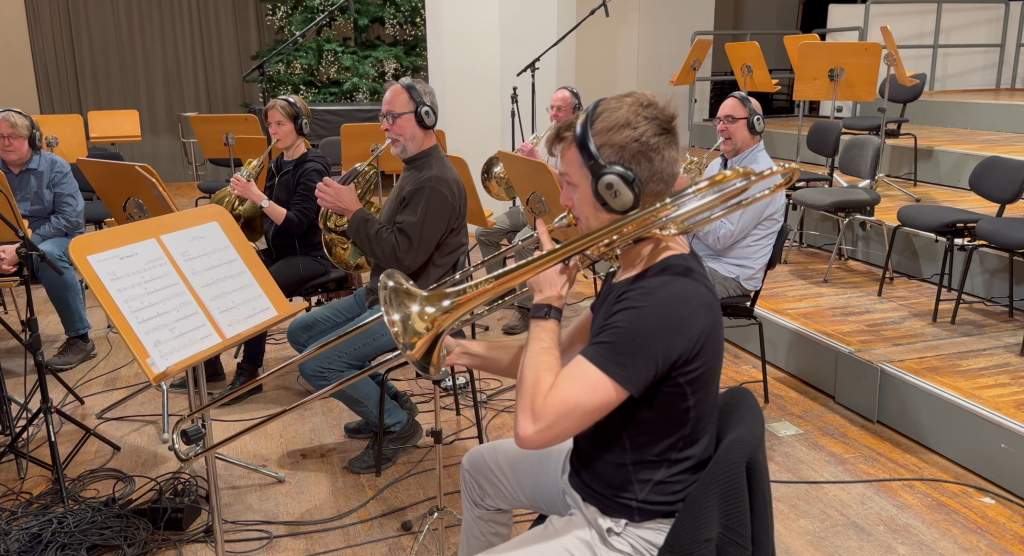
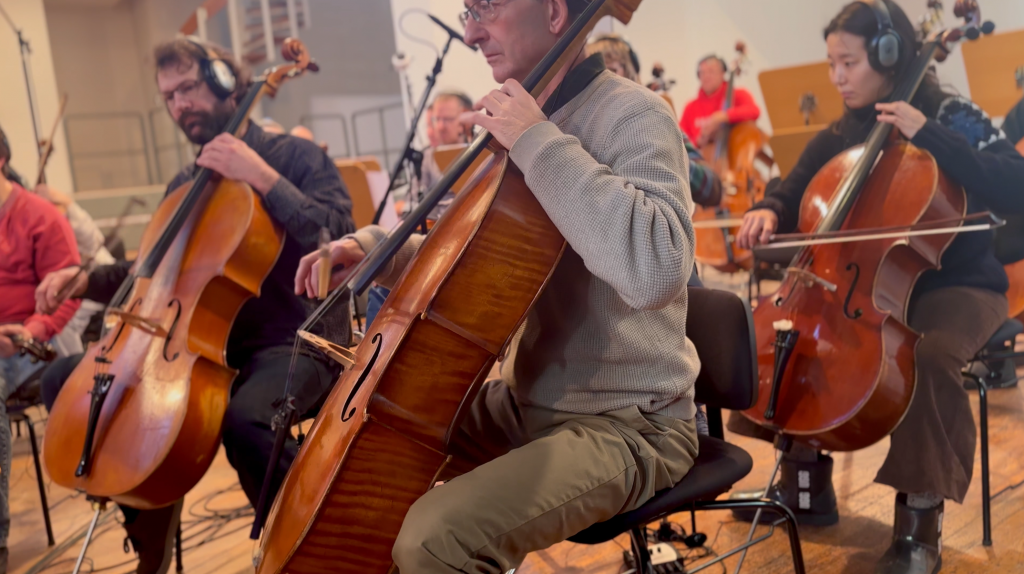
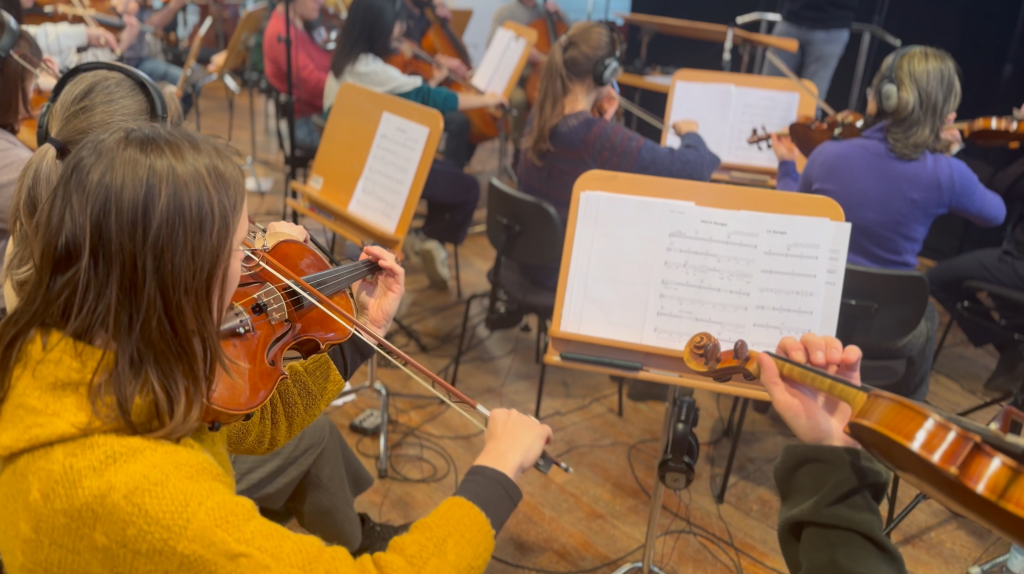
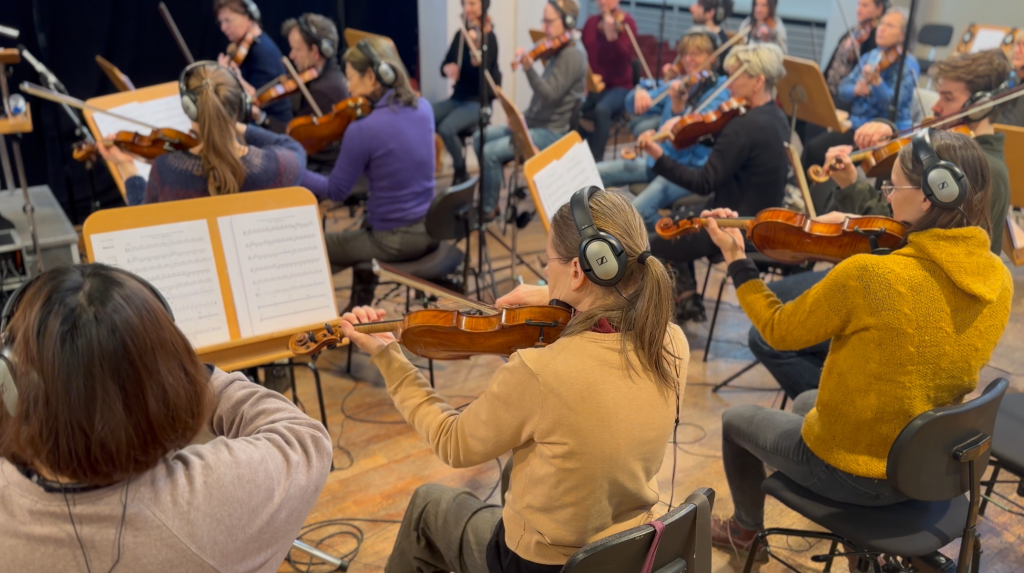
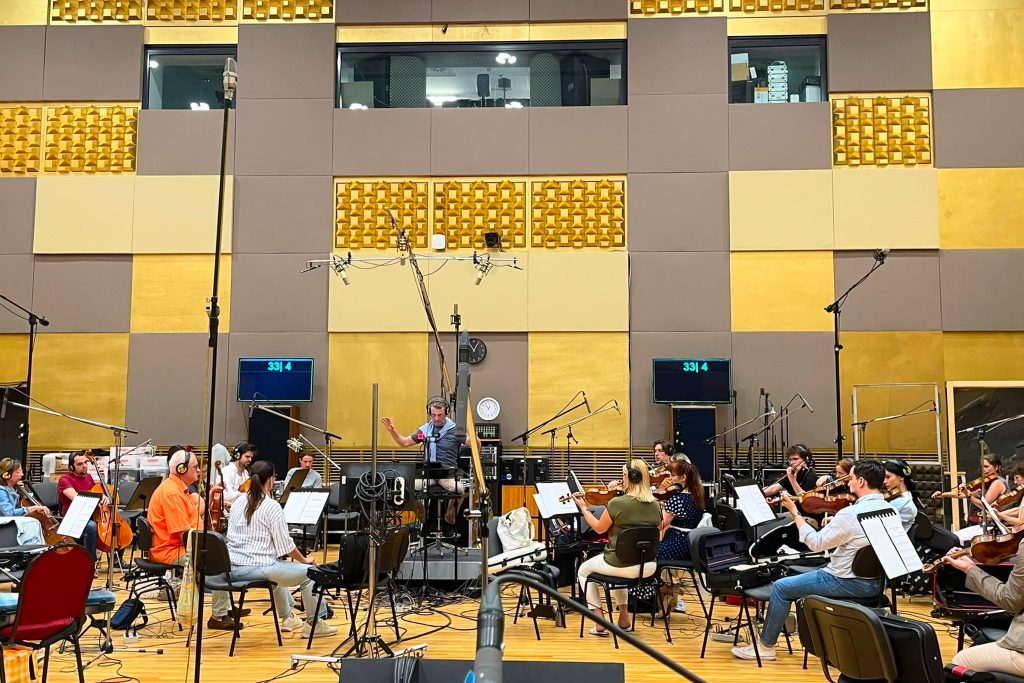
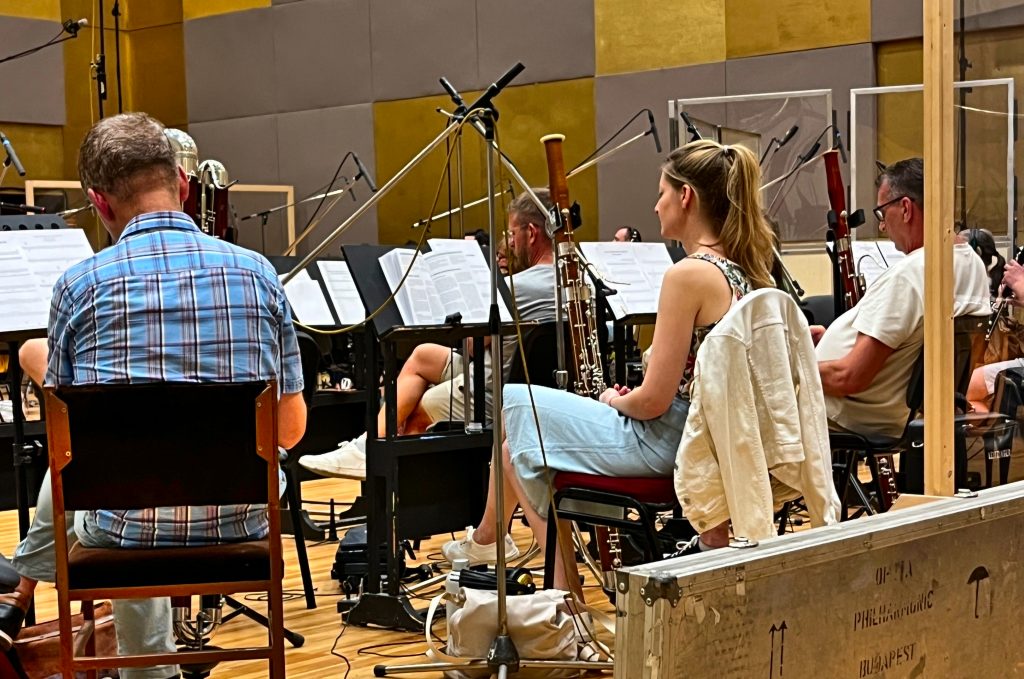
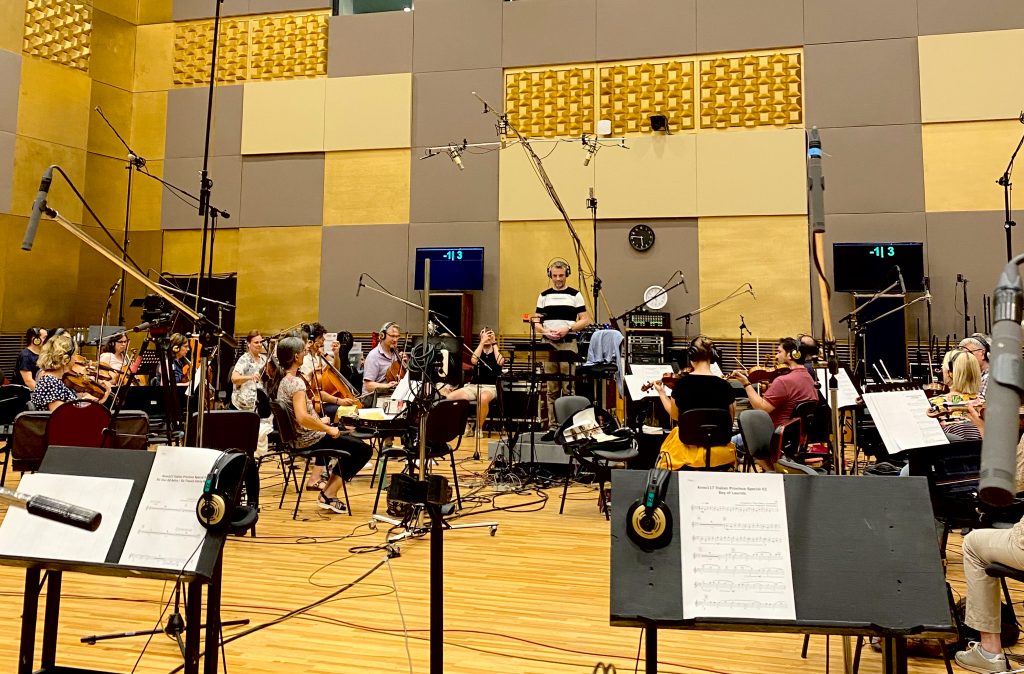
OPEN ORCHESTRA RECORDING SESSION – January 13th, 2026

Orchestra_1

My dear composers,

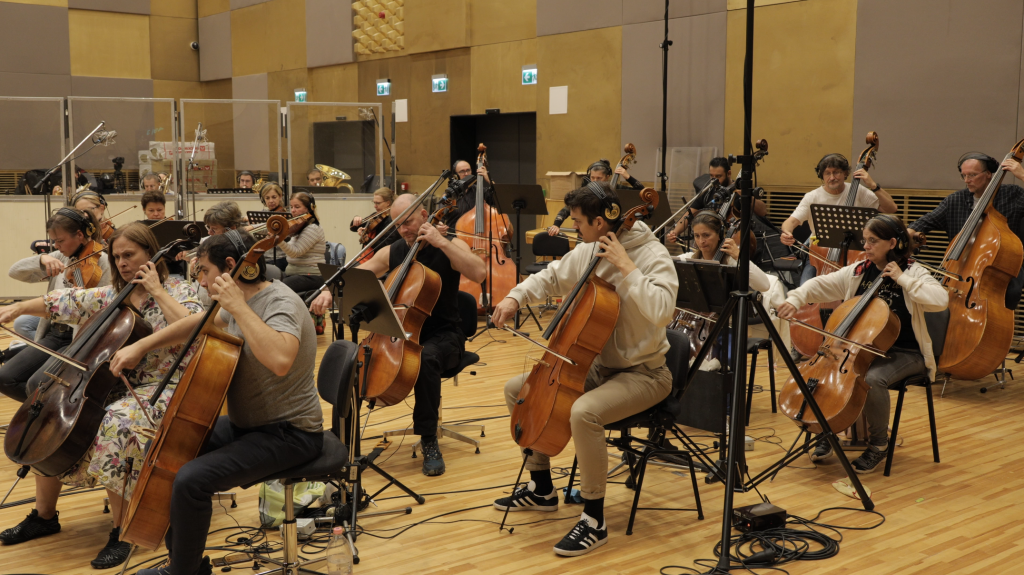
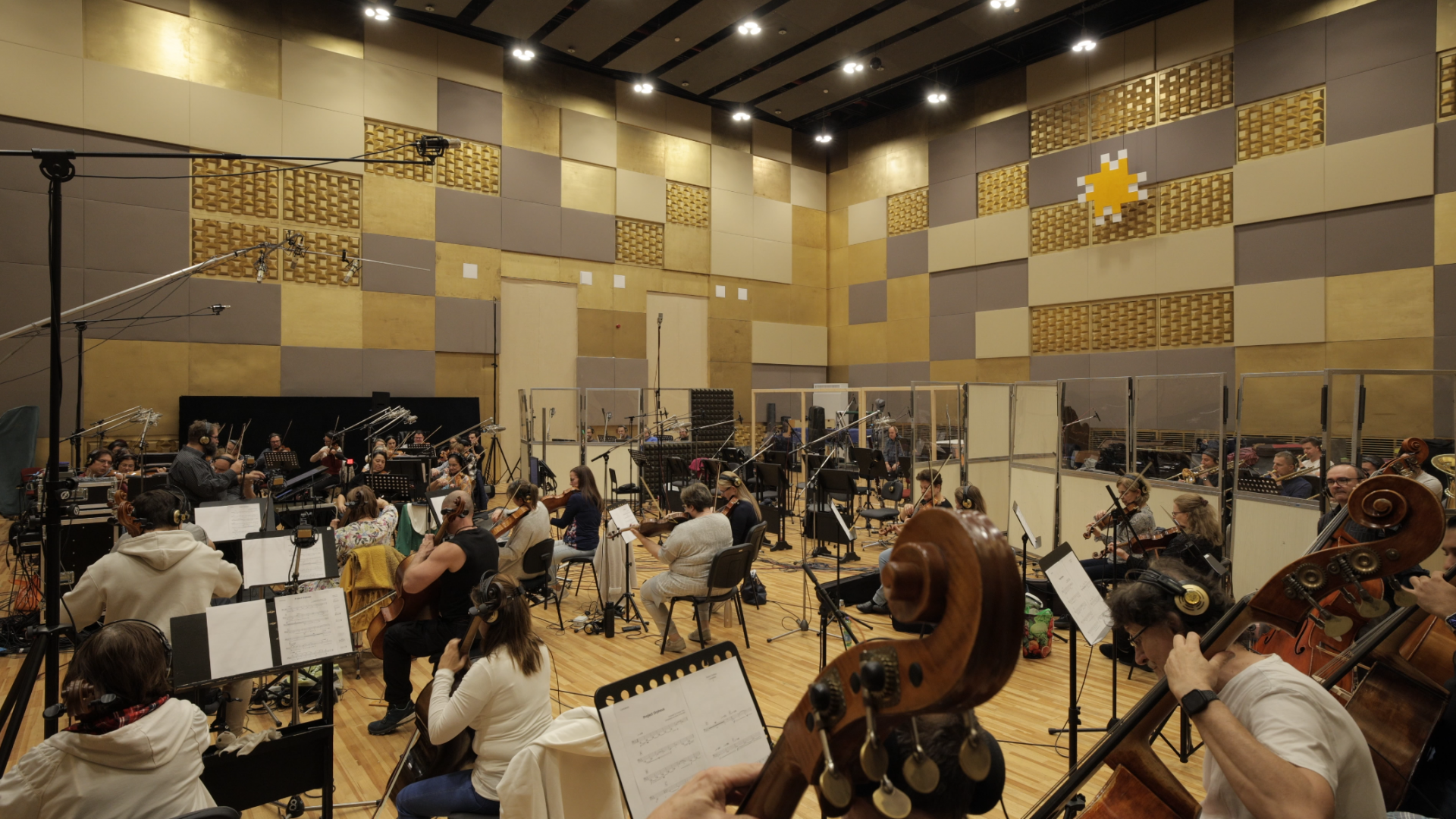
on January 13th, 2026, we are having another shared recording session with our trusted partners of the Budapest Art Orchestra.

Over the last 15 years we have enjoyed a working relationship, professional workflow and friendship with the whole team of dedicated musicians.

Many soundtracks have been brought to life with these wonderful musicians.


When: January 13th, 2026

Where: Budapest, Hungary

How does it work?

You write the music. After that you can simply send over a mockup of your music and midi files.

We will take care of the rest. You will receive finished recording files that you can drag into your DAW and replace the samples with.

A finished mix is also possible. Just let us know.


Are you interested?

Contact me directly at: christian.wirtz@dynamedion.com

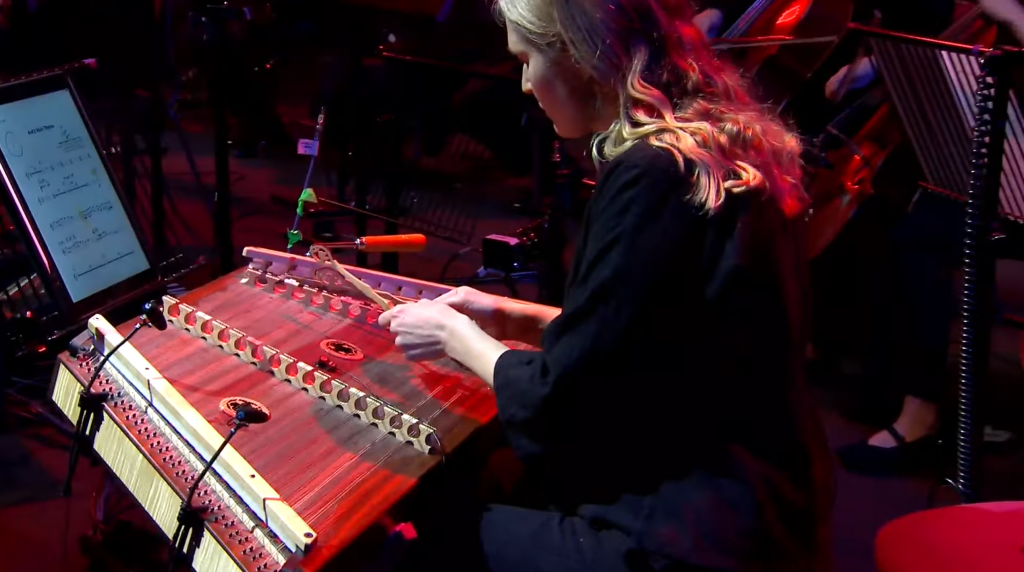
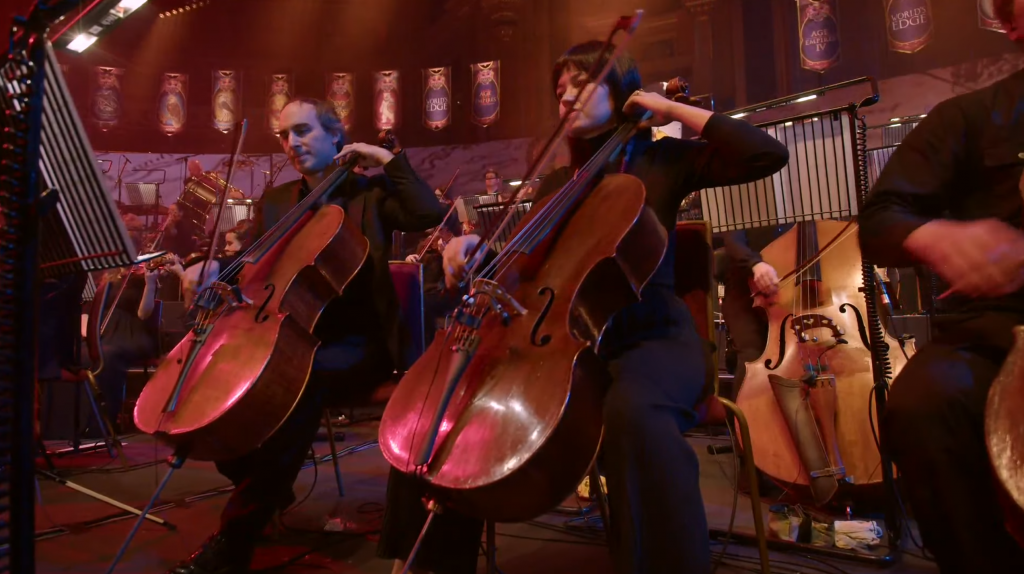
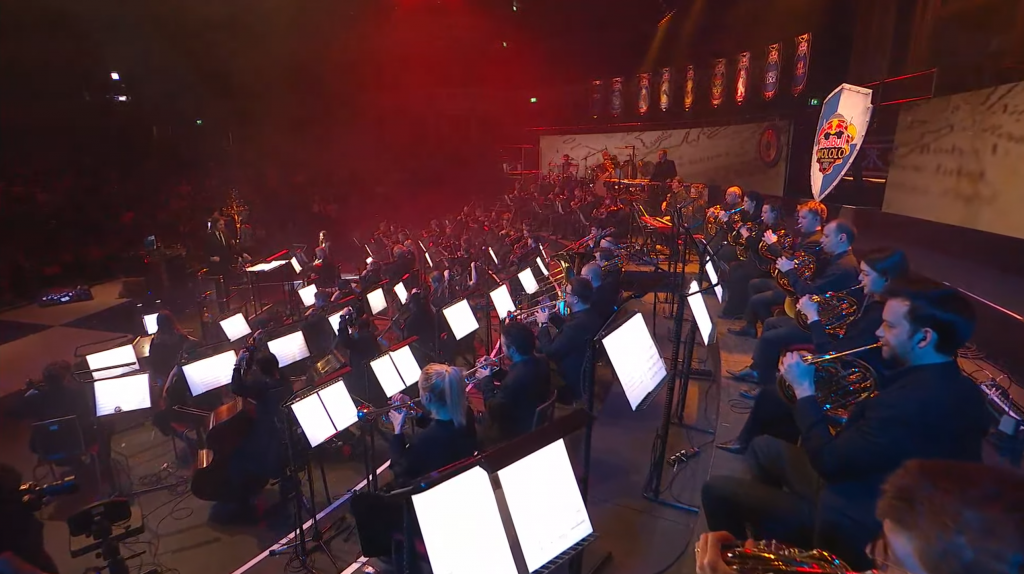
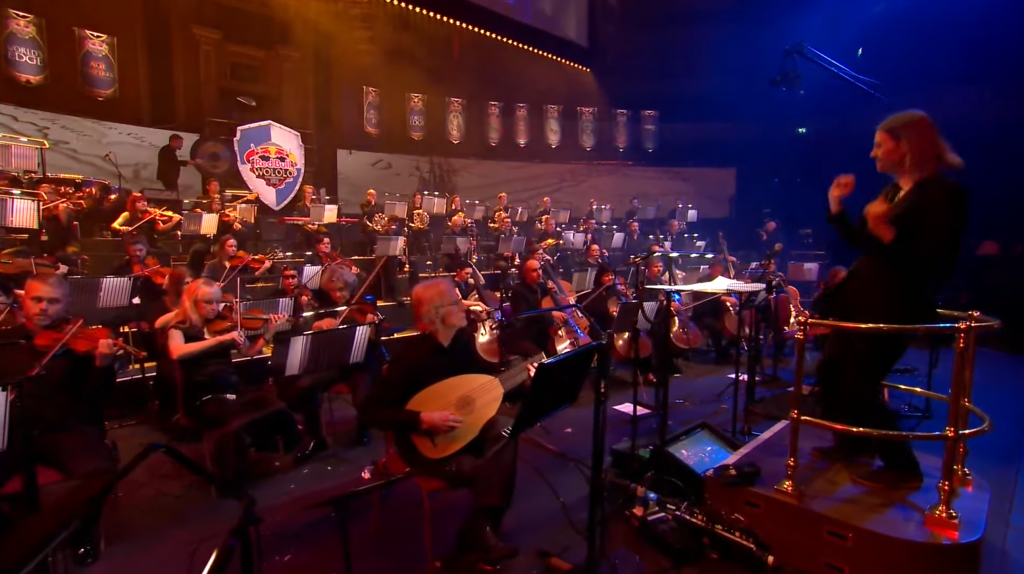
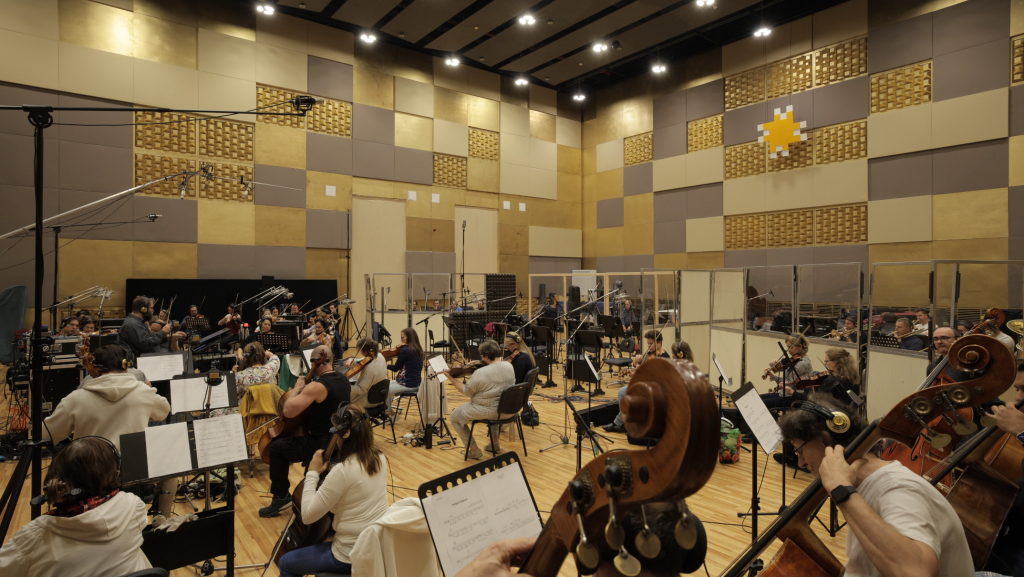
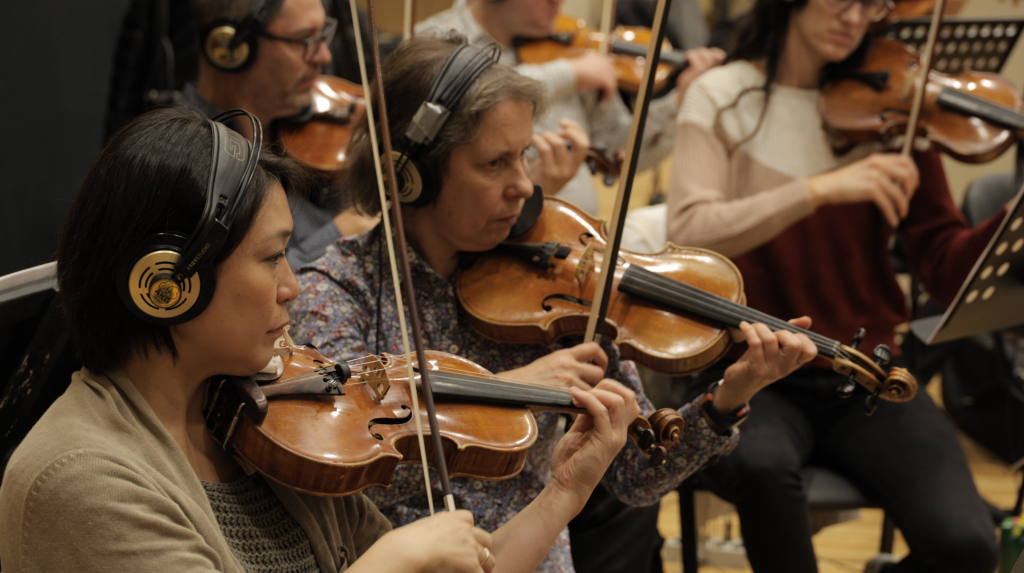
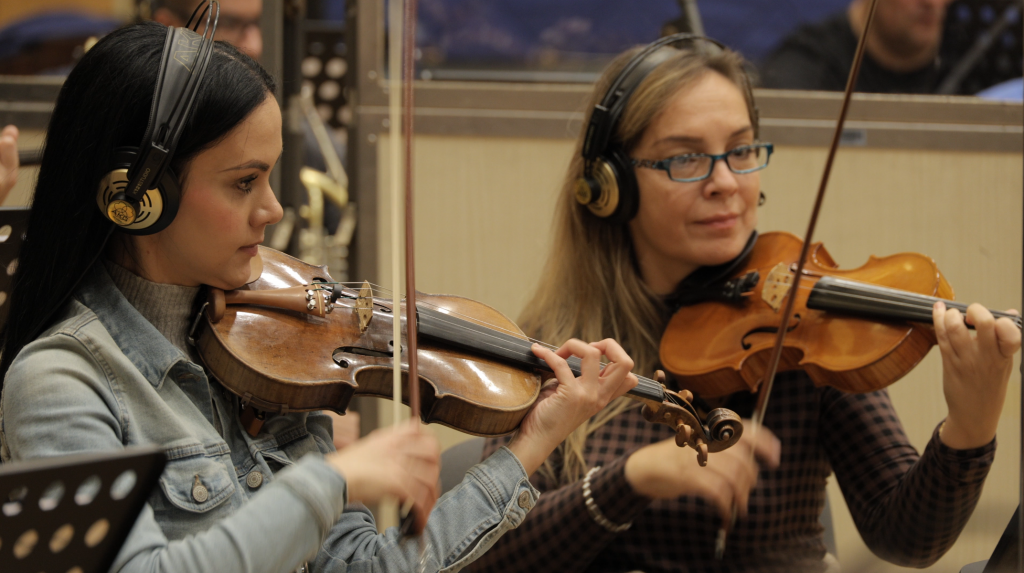
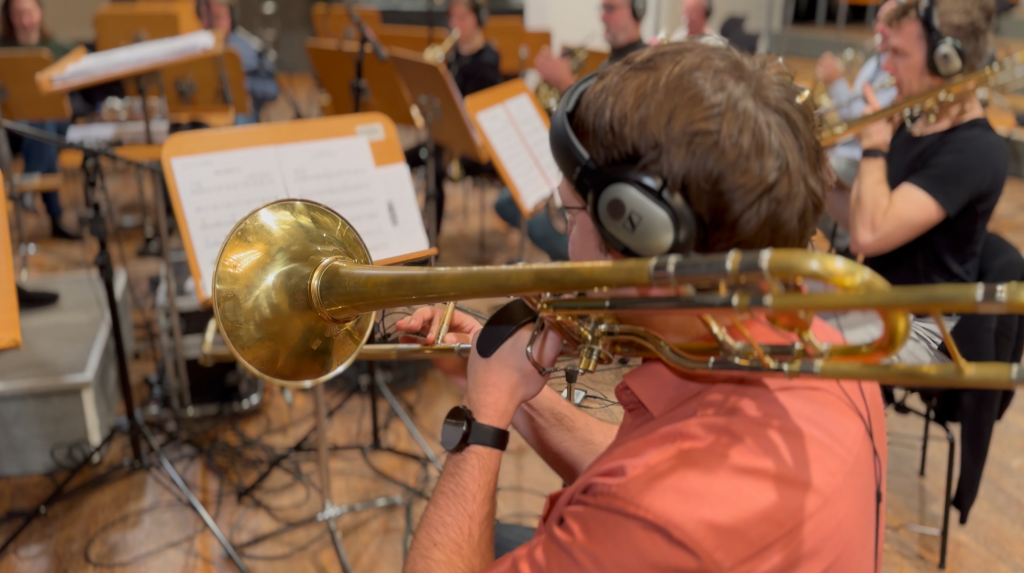
Orchestra recorded in Budapest during one of our open sessions. Mixed by Dynamedion.

Are you also interested in working together with Dynamedion? Check out our services and tell us more about your project!


 

DISCOVER OUR SERVICES

Maxton Hall: Season 2 – Behind the Orchestral Production

SYMU_S2_12208_SR


Project: Maxton Hall: Season 2

Client: UFA Fiction

We Did: Orchestral Production

Behind the music: Working with the composers on the recording of the orchestra for Maxton Hall Season 2


We’re thrilled to share our experience working on one of the most anticipated series of the year—Maxton Hall Season 2.

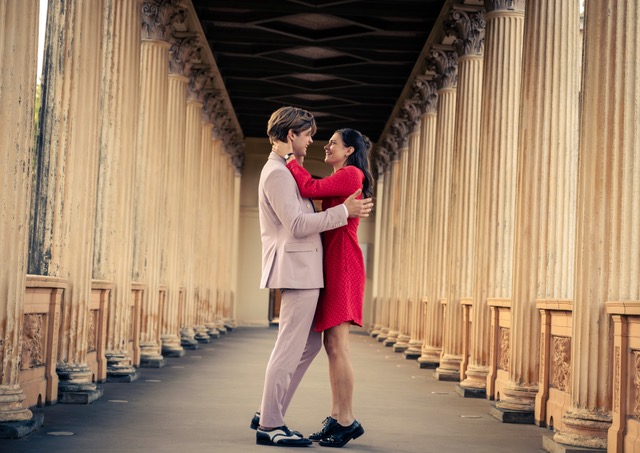
The composing team Victoria Hillestad and Julian Erhardt had the incredible opportunity to bring the emotional depth and dramatic tension of this beloved show to life through music.


The Recording Process

Recording an orchestral soundtrack is always a monumental undertaking, and Maxton Hall Season 2 was no exception. We worked with the wonderful Budapest Art Orchestra with whom we’ve established a short and very great routine.

One of the most rewarding aspects was collaborating closely with the show’s composers to ensure that each musical cue perfectly matched the on-screen action. From sweeping romantic themes to tense, suspenseful moments, every piece was crafted to elevate the storytelling.


Standout Musical Moments

Without giving away any spoilers, Season 2 features some truly memorable scenes that demanded equally powerful music. The main love theme became one of our favorite pieces to record—its emotional resonance perfectly captures the complexity of the central relationship.


The Technical Side

Modern film scoring requires a blend of traditional musicianship and cutting-edge technology. While we recorded live orchestra—nothing can replace the warmth and authenticity of real instruments—we also utilized advanced recording techniques and post-production tools to ensure the soundtrack would sound perfect across all viewing platforms, from cinema-quality systems to mobile devices.


A Labor of Love

Every member of our team poured their heart into this project. From the musicians who spent hours perfecting their performances to the engineers who captured every nuance, creating the Maxton Hall Season 2 soundtrack was truly a collaborative effort.

As viewers watch the new season, we hope they’ll feel the passion and dedication that went into every note. Music has the power to transform a good scene into an unforgettable one, and we’re honored to have played a part in bringing this story to life.

Congratulations to Victoria Hillestad and Julian Erhardt on the release of Maxton Hall Season 2.

We were honored to be involved in bringing their wonderful music for this show to life.

It is always fantastic working with a great orchestra and especially our trusted partners of the Budapest Art Orchestra.


Are you also interested in working together with Dynamedion? Check out our services and tell us more about your project!

 

DISCOVER OUR SERVICES

Monster Hunter: Wilds – Bringing the DIVA Songs to life & Explosions

monster_hunter_wilds-390940585-large

Project: Monster Hunter: Wilds

Client: Capcom

We Did: Vocal Production – Source Recordings


Recording the Diva Songs for Monster Hunter: Wilds

We’re excited to share a behind-the-scenes look at one magical aspect of Monster Hunter: Wilds— the vocal recording sessions for the game’s iconic diva songs.

The diva songs have become a beloved tradition in the Monster Hunter series, weaving emotional depth and cultural richness into the hunting experience. For Wilds, we knew we had to create something truly special that would resonate with both longtime fans and newcomers to the series.

Studio Sessions

The recording process was an incredible journey. Working with talented vocalists, we captured performances that blend power, beauty, and the untamed spirit of the wilderness that defines Wilds. Each take required careful attention to both technical precision and emotional authenticity.

Our sound engineers worked tirelessly to ensure every note captured the essence of the game’s new environments—from sweeping plains to mysterious ancient ruins. The result is a sonic landscape that we believe will enhance every moment of your hunting adventures.

A Labor of Love

These recording sessions reminded us why we do what we do. Hearing Anna bring these compositions to life, watching the music team’s vision become reality, and knowing that players al around the world will experience these songs — it’s what makes game development so rewarding.


Vocals by: Anna Serierse

Recording Engineer: Steffen Lütke

Recorded at Fattoria Musica, Osnabrück, Germany

Session Producer and recording manager: Christian Wirtz


Capturing the Roar: Recording Explosions for Monster Hunter: Wilds


Beyond the musical elements, we also had the thrilling opportunity to record explosive sound source recordings for Monster Hunter: Wilds. Our sound design team captured a variety of detonations and impacts to bring the game’s most intense moments to life. Each explosion was carefully recorded and processed to ensure it would convey the raw power and visceral impact that players expect when facing down massive monsters. These recordings add another layer of immersion to the hunting experience.


Lead Recordist, Project Manager & Sound Designer: Patrice Börding

Sound Designers & Recordists:  Wieland Müller, Fabio Coressel

Sound Designers: Benjamin Drumeaux, Axel Rohrbach, Michael Schwendler

Monster Hunter: Wilds – Release Trailer

Are you also interested in working together with Dynamedion? Check out our services and tell us more about your project!

 

DISCOVER OUR SERVICES

Dynamedion creates the Soundtrack for Anno 117: Pax Romana

Dynamedion creates the Soundtrack for Anno 117: Pax Romana

Anno117_Website_Header

Project: Anno 117: Pax Romana

Client: Ubisoft

We Did: Music Composition • Music Production  • Orchestra Recording

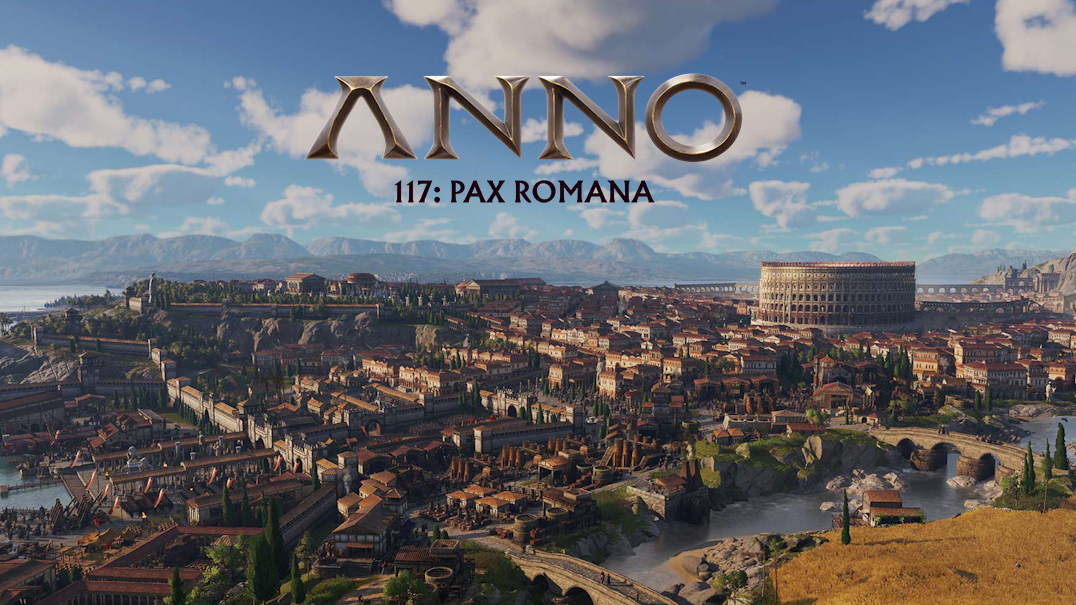
Dynamedion are proud to announce that we continue our long-standing collaboration with Ubisoft Mainz on the Anno series by composing and producing the official soundtrack for Anno 117: Pax Romana. Building on years of partnership and a shared musical vision, Dynamedion composers Matthias Wolf, Tilman SillescuAlex RöderArmin Haas and Henning Nugel crafted a score that brings the grandeur, ambition, and humanity of the Roman Empire to life through rich orchestral textures and expressive themes.

All music was composed and recorded by Dynamedion, featuring live orchestral sessions and solo performances that blend authentic ancient influences with cinematic storytelling. The result is a deeply immersive soundscape that captures both the power and the peace of the Pax Romana – a soundtrack that continues the proud musical legacy of the Anno series.

Anno 117: Pax Romana is out today – build your empire in Albion or Latium!

Anno 117 release trailer

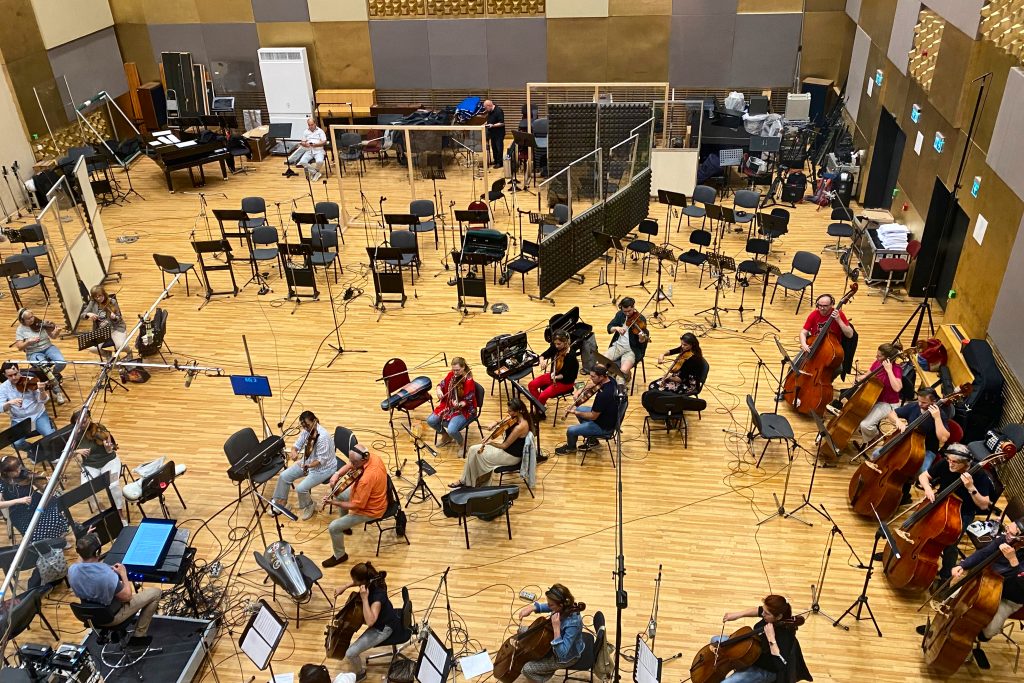
Impressions from the recordings at OPERA Eiffel Art Studio in Budapest, Hungary

Creative Director Music & Lead Composer

Matthias Wolf


Composers

Tilman Sillescu

Alex Röder

Armin Haas

Henning Nugel


Orchestra

Budapest Art Orchestra


Conductor

Gyorgy Gulyas Nagy


Recording

East Connection Music Recording at OPERA Eiffel Art Studio in Budapest, Hungary


Digital Recordist

David Lukacs


Recording Engineer

Gabor Buczko


Contractor

Miklos Lukacs


Session Producer

David Christiansen


Orchestrator

David Christiansen


Orchestral Mixing Engineer

Chris Wirtz


Final Mixing Engineer

Matthias Wolf


Soloists

Henning Nugel

Anna Mkhitaryan

Chris Wirtz

Sandro Friedrich

Armin Haas

Matthias Wolf

Katharina Wirtz

Are you also interested in working together with Dynamedion? Check out our services and tell us more about your project!

 

DISCOVER OUR SERVICES

Baelin goes fishing – and Dynamedion brings the music

Baelin goes fishing – and Dynamedion brings the music

Composing the theme music for Viva La Dirt League’s Nice Day for Fishing

NDFF_Website_Header

Project: Nice Day for Fishing

Client: Fusion Play

We Did: Music Composition • Music Production

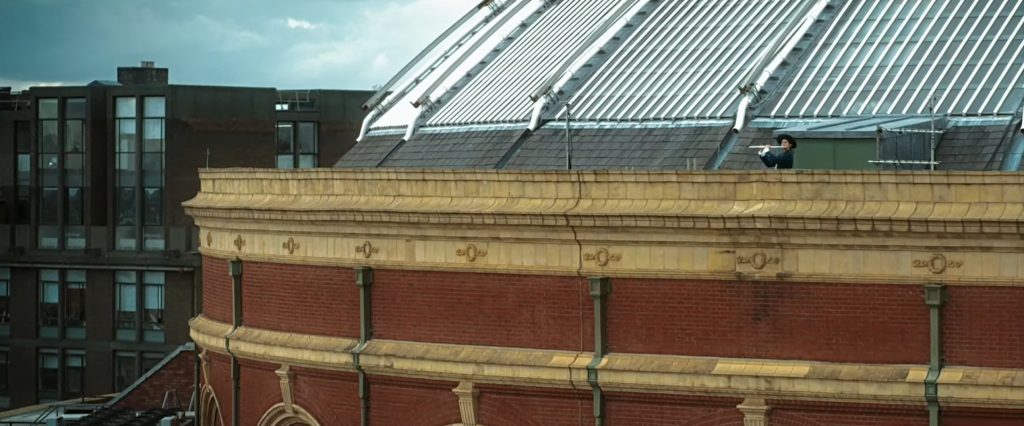
Sometimes it’s the side characters who deserve the greatest stories. Baelin, the laid-back fisherman from Viva La Dirt League‘s world of Azerim, is just an NPC – but that’s exactly what makes the fact that he now takes the leading role in his own video game so wonderfully absurd and amusing. Together with FusionPlay, Viva La Dirt League has created an 8-bit retro game that focuses on Baelin’s adventures: Nice Day for Fishing.

We are thrilled that Dynamedion composer Jochen Flach got to create the soundtrack for this charming pixel adventure. After all, what would a retro game be without the appropriate 8-bit music?

We spoke to our composer Jochen Flach about his work on this special project – and gained some exciting insights.

Question: Which sound elements were important to you in authentically capturing the “8-bit retro” character of the game without making it seem old-fashioned?

Jochen Flach: I think the very fact that we mixed 8-bit sound with a modern epic orchestra gives it a fresh feel. But “old-fashioned” is a difficult term to define. Since the visuals of the real scenes are based on the Middle Ages, I used appropriate harmonies and musical phrasing. Some people might find this “old-fashioned.”

Question: Could you give us some insight into how you approached the initial sketches for the soundtrack? Did you start with melodies, rhythms, or timbres?

Jochen Flach: I always start at the piano. That’s how it’s been in recent years. It’s a good place to develop melody and rhythm. Of course, I could have started directly with a synthesizer. With that, the sound aesthetics of a sound, the way you play the sound, can also influence the theme. But with Nice Day For Fishing, the theme was already established as a motif in the music of the Youtube videos by Viva La Dirt League. In that respect, the piano is really a wonderful instrument for developing or refining ideas.

Question: To what extent did you draw on classic retro soundtracks when composing – and where did you consciously incorporate modern influences?

Jochen Flach: To be honest, I was not really inspired by classic retro soundtracks when composing. I only drew inspiration from the sound aesthetics. I was inspired by the images and descriptions of the levels that were provided to me. The rest came about through trial and error.

Question: How close was the collaboration with FusionPlay and Viva La Dirt League – did you receive specific musical guidelines or did you have a lot of artistic freedom?

Jochen Flach: The motif for the main theme came from the VLDL web series. For the Maintheme composition and the soundtrack creation, it was a creative back-and-forth between us and FusionPlay. Sometimes it took a few rounds to find the right touch for a track. The developers had specific ideas about how the soundtrack should sound in the end. That helped a lot and I think we successfully developed the ideas and themes together.

The Nice Day for Fishing release trailer

Whether you’ve known Baelin for years or are going on your first fishing adventure with him, Nice Day for Fishing is a lovingly crafted retro game that charmingly combines nostalgia, humor, and fantasy. We are proud that our music has helped bring this special feeling to life, and we hope you enjoy playing the game as much as we enjoyed composing it.

Are you also interested in working together with Dynamedion? Check out our services and tell us more about your project!
 

DISCOVER OUR SERVICES

OPEN ORCHESTRA RECORDING SESSION – December 1st, 2025

Open Orchestra Recording Session

Orchestra_1

My dear composers,

on December 1st, 2025, we are having another shared recording session with our trusted partners of the Budapest Art Orchestra.

Over the last 15 years we have enjoyed a working relationship, professional workflow and friendship with the whole team of dedicated musicians.

Many soundtracks have been brought to life with these wonderful musicians.


When: December 1st, 2025

Where: Budapest, Hungary

How does it work?

You write the music. After that you can simply send over a mockup of your music and midi files.

We will take care of the rest. You will receive finished recording files that you can drag into your DAW and replace the samples with.

A finished mix is also possible. Just let us know.


Are you interested?

Contact me directly at: christian.wirtz@dynamedion.com

Orchestra recorded in Budapest during one of our open sessions. Mixed by Dynamedion.

Are you also interested in working together with Dynamedion? Check out our services and tell us more about your project!
 

DISCOVER OUR SERVICES

MUSIC FOR BRAWL STARS CHARACTER DRACO

Music for Brawl Stars Character Draco

Composing the theme music for Draco in Brawl Stars

brawlstars-bg

Project: Brawl Stars

Client: Supercell

We Did: Music Composition • Music Production


To celebrate the new Brawl Stars game character “Draco”, Dynamedion teamed up with Metalverse/Musical Bits to create a heavy metal in-game soundtrack called “Draco’s Flames”.

Draco, the new game character in the multiplayer mobile game Brawl Stars with over 1 billion downloads, is the game’s first legendary Brawler to wield a guitar and with Draco’s love for heavy metal, extreme sports and “Dungeons & Dragons”, the in-game soundtrack “Draco’s Flames” is the perfect musical accompaniment. The song was written by Dynamedion’s Armin Haas and was then fully produced with help of Musical Bits’ AI driven composing and production tools.

Draco’s Song

Pierre Langer, Co-Founder of Dynamedion, says:

“Game music has its own unique value, that strongly links the players emotions to the gaming experience. So, creating an original song for Draco as an ingame character was really exciting. In the past 25 years, we have created quite a few virtual bands for games, but always analog to digital. This time, we had the exceptional chance to get to a new level of immersion, by creating AI powered instrumentalists, playing their instruments like a musician would in real life, while being completely virtual.”

Stefan Schmidt, Metalverse and Musical Bits CEO, comments:

“Musical Bits’ Production Assistance Tools have been used to generate Drumbeats, Rhythm Guitars and Choirs based on the composition of Dynamedion Composer Armin Haas. Given the song structure, the chords and the fully produced medieval instruments, Drums, Guitars and Choirs have been generated automatically out of AI models that have been trained, annotated and developed by musicians of the Musical Bits team over the last 2 years. The lead vocals have been recorded and produced “old-school” by a real singer singing with his real voice.
Drako was interpreted as a young metalhead, enthuthiastic about metal in general and his own guitar in particular. There is not too much dynamics in this stay of metal, it is just about fast and faster, loud and louder and high and higher, and we tried to push composition, melodies, vocals and production in this very positive “over-the-top”-attitude that is the definition of powerful heavy metal. Draco is pure power metal! Together with the heroic, 100% human made lead vocals, Draco’s Flames is a great example of how technical tools can help to bring a great human composition to full production readiness  – Have no Fear, Draco will be near!”

Armin Haas, Dynamedion Composer, adds:

“For me as a composer, it is vital that the creative part of a composition stays human, even if the result is designed to appear in a 100% digital computer game. Draco’s Flames reveals its own very special energy with the interaction of men and machine and the result is fantastic.”

Are you also interested in working together with Dynamedion? Check out our services and tell us more about your project!
 

DISCOVER OUR SERVICES

THE MUSIC ON LAST TRAIN HOME

The music on Last Train Home

Composing the soundtrack for the Czechoslovak Legion in Siberia

Last_Train_Home_Keyart_Logo_

Project: Last Train Home

Client: Ashborne Games

We Did: Music Composition • Orchestra Recordings


Dynamedion and Ashborne Games have recently wrapped up their successful collaboration on the latest hit game, Last Train Home. Released recently on November 28th on Steam, it’s an exciting and tense game that needs a soundtrack that is up to the task. The public reception of the game’s music, stamped with accolades and admiration, stands testament to their creative accomplishment.

Last Train Home is a real-time strategy game with management elements developed by Brno-based company, Ashborne Games, channeling an authentic wartime narrative. The soundtrack, an essential part of the gaming experience, enriches the storyline with its atmospherics of raw emotion, fighting spirit, and melancholia. Capitalizing on inspiration from Czech classical music and Russian traditional instruments, it embodies the historical essence of the game.

The game tells a tale not told much in Western history books. During the Great War, not all Czechoslovaks fought for Austria. Disillusioned with the Habsburg crown, many tried to dodge compulsory service or did what today we’d call “quiet quit”, as you can read about in The Good Soldier Švejk by the Czech writer Jaroslav Hašek. Many though, would follow Hašek’s own perilous path and make their way to the East to fight in the Czechoslovak Legion.

The official game trailer

After the Great War, Russia collapsed into a mess of revolution and civil war, and the Czechoslovak Legion had to make their way safely home. In Last Train Home, you play as a Czechoslovak Legionnaire, guiding your troops across Siberia on an armored train in a quest to make it back to Central Europe the long way around.

A journey of collaboration

As an effective project, the Last Train Home soundtrack was born from the active collaboration between our composers and Ashborne Games skilled team. From Dynamedion, Simon Wiebe, Armin Haas, Nico Patricio, Henning Nugel, Chris Wirtz, and Matthias Wolf all made their contributions, working closely with Jiří Křupala at Ashborne.

“It was a real partnership in my opinion,” Jiří said about working with our composers. “With Simon, we exchanged a lot of calls about the intentions of the soundtrack. I would tell him and the composers what feelings I have about the part and what feelings I would like to have instead, and I let them provide the best solution.”

The vision behind the soundtrack

Capturing the rugged environment of Siberia – where much of the game takes place – meant shaping a soundtrack that could echo those harsh landscapes. “The keywords defining that atmosphere we were looking for,” Jiří told us, “were authentic, raw, cold, dirty, and melancholic. The story is set right after the Great War ended in a military setting, so I wanted to reflect that in the music and in the sound design.”

The music was to create a sensitive blend aligned with the war-torn backdrop. Jiří wanted the core of the music to come from Czech classical influences, and there would have to be some kind of recognizable motif that would call back to Central Europe.

“Of course, it was the Vltava-theme from Smetana’s symphonic work Má Vlast, which in turn means ‘My Fatherland’,” Henning said. “Just perfect for a game where the soldiers try to get back to their home country. Basically, everyone knows this melody and it’s easily recognizable.”

The explanation trailer

Henning wrote the main theme and sprinkled the Vltava-theme in between the main melody lines here and there. “While the main theme is featured throughout the entire score, the Vltava-theme also pops up from time to time as a feeling of longing for home.”

Jiří  adds: “Imagine trying to get home which was just several hundreds of kilometers away from you, but you had to go the other way, literally across the whole globe. That must have been insane! And so in our soundtrack, I wanted players to feel this longing for home, this solitude and struggle for survival in Siberia.”

The musical structure

The game is structured into two main parts: Train Management and Strategy Missions, and the music had to reflect that gameplay. It was essential to compose exciting battle music and dramatic background music that could be used both in exploration missions and those focusing on conflict. There was also music for specific scenarios that needed their own feel, along with an extra track for the final mission in Vladivostok.

“That one in my opinion really raises the tension there,” Jiří said.

The Train Management portion of the game is narratively divided into three acts, which is reflected in the music, too. The plot develops and new songs are introduced thematically in response to events as you go through the parts.


Last Train Home screenshot 1


As an example, the game’s opening theme, plays before you reach Moscow and for a short time after. This track though is replaced with a more somber version around halfway through the campaign. That gets swapped again at the end of the game with an even grittier and more dissonant version.

“All the music gets rougher as you progress through the campaign,” Jiří explains. “And not just the music, the visuals of the game and cinematics get colder too!”

Composing the soundtrack

The main Vltava-inspired theme suffuses the entire soundtrack, complementing the dark and melancholic symphony that marks the historic game setting. “The soundtrack is filled with rather dark and melancholic orchestral pieces befitting for a game in this historical setting,” said Henning.

“The challenge in writing this music was finding the sweet spot where the music has a bit of action, it’s tense but at the same time it’s not intrusive,” Nico, another of our composers, noted. “I remember Jiří telling us that these particular tracks needed to give the player a feeling that he’s walking on tiptoes 🙂 When I read that, I immediately understood what we were going for.

“The sound we were aiming for was very intimate and personal rather than the big, over-the-top orchestral sound,” our composer Chris adds.

Various parts were also performed by the composers themselves. “I have an old balalaika that I played,” Chris went on. “Just as a shimmering color that comes in and out of the orchestra. If you play close attention, you can even hear me singing here and there.”

Reflection and response

Looking back on the achievement, Jiří is immensely proud of the work done on the soundtrack. They were so productive and inspired, that the early plan for a limited soundtrack ballooned. “My original plan was to have around half the total minutes we ended up with,” Jiří said. “Silly, inexperienced me. But the game needed it.”

It was a lot of work. From honing the vision to the seamless integration of the Vltava-theme, from collaborating with multiple talented composers to successfully maintaining a consistency of tone, Jiří had to coordinate every step and mix it seamlessly to create the perfect musical experience for the players.

But Jiří enjoyed coordinating with our team, as ours loved working with him and Ashborne. “Working with Ashborne was a blast!” Simon said. “Ashborne made my job as coordinator on the Dynamedion side as easy as possible providing insights into their passion and vision as to what the gameplay should feel like.”


Last Train Home screenshot 2

A voyage home

As the culmination of tireless efforts, the Last Train Home soundtrack transcends being a mere backdrop to the game. It emerges as a narrative force in its own right, and has garnered commendation from players and critics alike. The soundtrack masterfully encapsulates the narrative’s essence, and its profound impact on the game and its reception is undeniably a testament to the successful vision, hard work, and collaboration between Jiří and our team.

The game and its music are more than just a leisurely pastime—they’re an experience, a dive into history, and an emotional odyssey. Now, it’s time to embark on that venture yourself. Get absorbed in the deeply curated world of Last Train Home. The game and soundtrack are both available for purchase on Steam. Let this symphony of survival enrich your senses today!

Are you also interested in working together with Dynamedion? Check out our services and tell us more about your project!
 

DISCOVER OUR SERVICES

Age of Empires IV: The Byzantines and Japanese

The Sultans Ascend: Creating the music for the new expansion

The game continues with exciting new content

Age of Empires IV - Hero

Project: Age of Empires IV

Client: Relic Entertainment, World’s Edge

We Did: Music Composition • Orchestra, Choir, Soloist Recordings


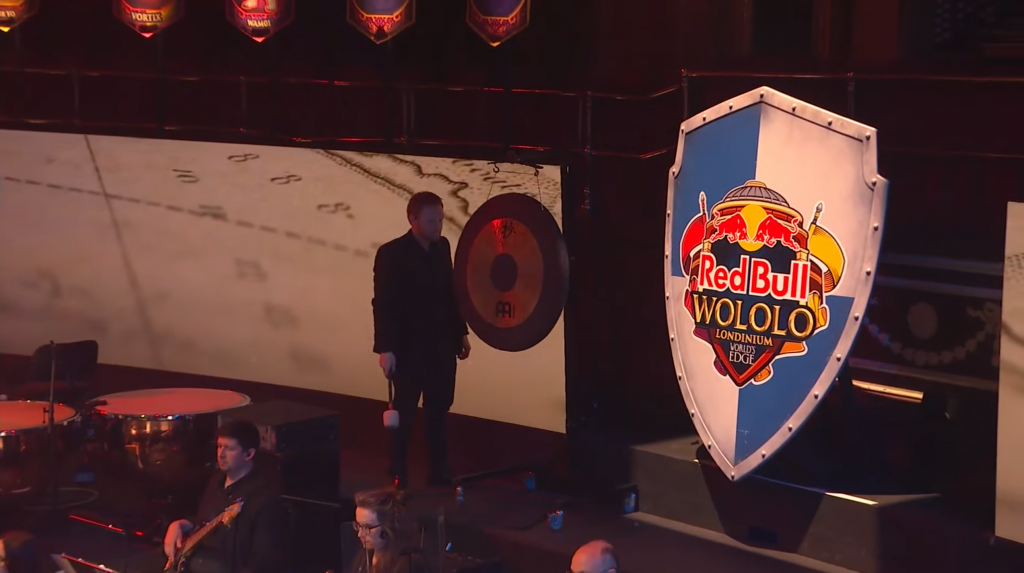
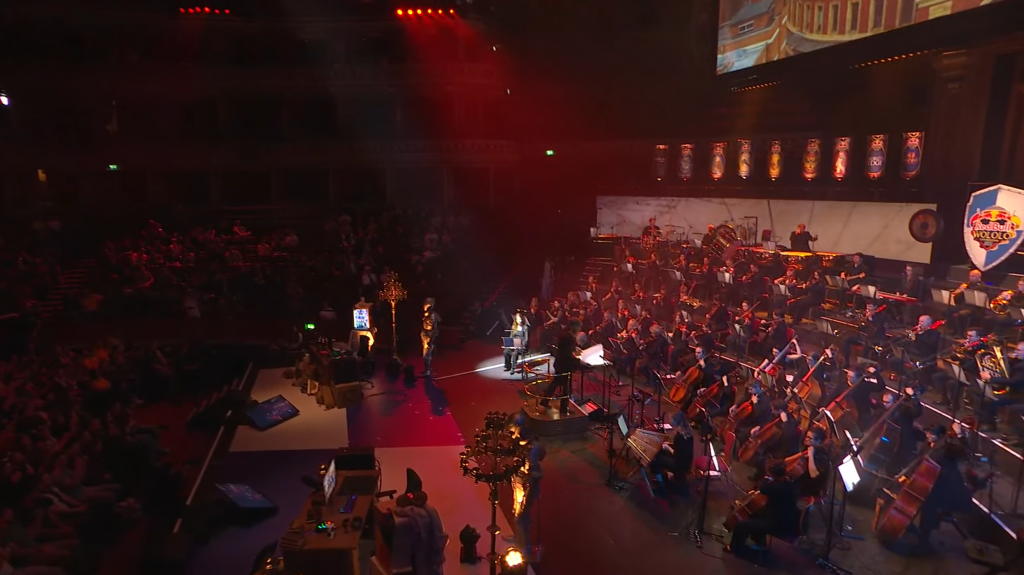
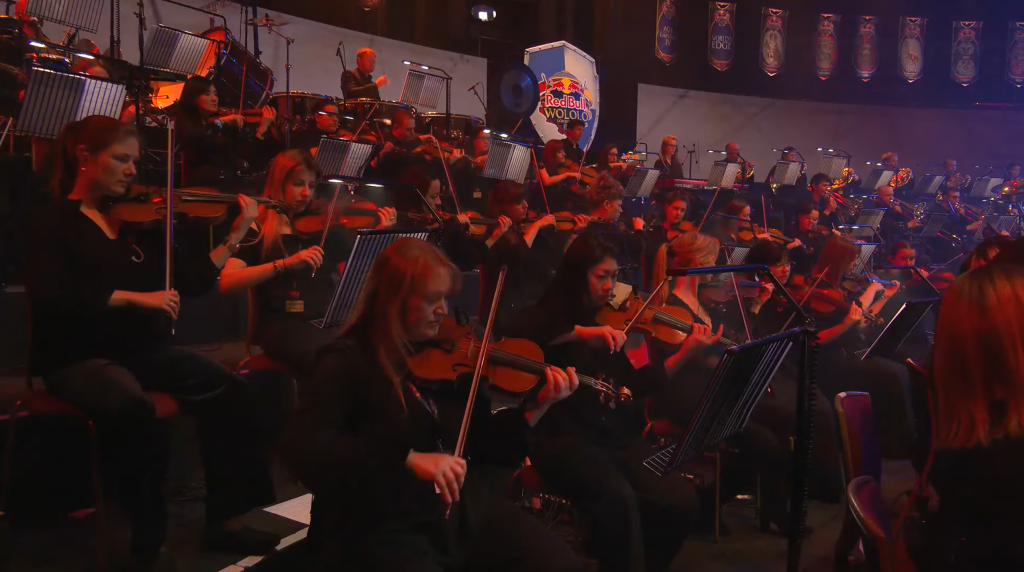
Our composers have struck the right chord once again, composing a melodious soundtrack that combines the specifics of each civilization’s traditional music with the overall soundtrack and sound design. Our long-standing partnership with Relic Entertainment and World’s Edge continues to be positively melodic, as we’ve worked closely with the Relic Audio team to develop the score for the Byzantine and Japanese civilizations that are featured in this latest expansion.

Christian Wirtz, Nicolo Patricio, Dominik Morgenroth, and Henning Nugel – our composer team tackling the task – drew their inspiration from traditional instruments and chants to craft authentic-sounding themes for each culture. The creative process was filled with Zen as they blended their different strengths and specialties to explore the new in-game cultures. From powerful taiko drumming to ethereal Byzantine chants, The Sultans Ascend soundtrack will transport players to truly diverse realms.

The expansion also features “re-imagined variants” of civilizations that are already in-game, which include new heroes, units, and strategies. Our team worked on the video music for the Abbasid Dynasty variant.

We’re proud to continue working on soundtracks with Relic Entertainment for the Age of Empires IV. We hope our melodies help to immerse players in the gameplay and further develop the atmosphere of playing each civilization. It’s been a privilege to work again alongside the Relic team – we look forward to more musical memories together!

For the music of the Ottomans and Malians, which are not part of The Sultans Ascend expansion, Dynamedion composers Christian Wirtz, Alexander Röder, Henning Nugel and Armin Haas set to the task.

The adaptive music of Age of Empires

Before even broaching the subject of their assigned civilizations, the composers had to get familiar with the game system and the various ways it handles the music. The choices that players make in the game have an impact on Age of Empires IV’s intricate layering and seamless transitions. At any point, the music may go from a relaxed exploratory state to a tense or aggressive one, or from light to heavy fighting. Variations exist for each age of the game as well, and they tend to get increasingly complex as the gameplay advances. When a player enters a new Age, for example, the tone shifts and elements are added in, and there are entrance and exit pieces as well as typical transition parts.

Composing for the Byzantines

Henning and Chris started by dividing the workload up by the ages. “We developed the overall concept together though and really had much fun teaming up,” Henning said. “As the Byzantines had to sound distinctly different to other civs in the same geographical area, we both really dove into researching standout features of Byzantine music.”

Like with the other civilizations, it would start very simply and slowly develop to more complex themes. “It goes from the music of the common people to the grand religious music we think of as Byzantine,” Chris says.

The Byzantine period proved a little difficult to triangulate musically, since the only written records left concern liturgical music. They dived into the music of the Church, as well as folklore music that’s been handed down mostly by memory. “The secular music has been poorly documented,” Chris puts in, “and we had to do a lot of deep research to get a good understanding of what that might have sounded like.”

Together, based on these inputs, they brainstormed how worldly music could have sounded in Byzantium and came up with an interpretation they were able to work into the gameplay. The study led to finding the right instruments.

The sounds of history

“There still exists in current folk music an instrument that was actually called the ‘Byzantine Lyra’ but now goes under the name of ‘Cretan Lyra’,” Henning shares. “It’s a knee fiddle with three strings played with a bow. It has a rather special sound as instead of pressing down on the strings it’s played with the fingernails touching the strings from the side.”

Henning was happy to find a Cretan Lyra for himself to start his experimentations. The sound later developed into the Pontian lyre that Chris played in the higher ages.

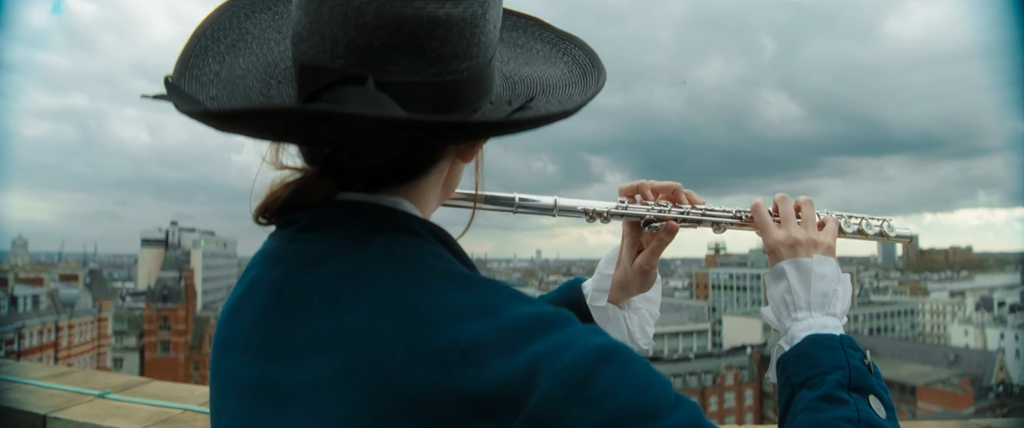
Building upon that, he wanted something with a distinct sound during a distinct time in history, and turned to the Aulos, a set of two flutes that are played at the same time by a single player. “There’s a lot of evidence these were played throughout classical Greece and though I didn’t find them mentioned there, I’m sure that they survived into the medieval Byzantine era in one way or another.”

Read more about Dynamedion and the Age of Empires IV soundtrack here.

It was with this sentiment in mind, that he set about and found Thomas Rezanka, an Austrian flute-builder, who specializes in building Auloi. Thomas custom-built a pair of plumwood Auloi and gave him a lot of research material on how they were used. “There are these beeswax pieces used to close different holes on each flute as there are far too many to cover them all with the fingers of one hand,” Henning explains. “By rolling the wax and covering certain holes, it is possible to create a lot of different scales in different keys. You can hear the aulos in the exploration music and in the front-end loop.”

Both Henning and Chris are expert instrumentalists themselves and filled in a lot with their own handiwork.

Finding the right voice

Henning and Chris had both a lot of great experiences setting up the vocals for other civilizations, so they were eager to add something even more authentic to the soundtrack than just instruments. They found a fantastic female choir called Chórεs in Athens, who specialized in reviving traditional songs. “For Age 1, I wanted a female soloist who would sing in a traditional way, just like perhaps a Byzantine village girl picking flowers and humming to herself. But she also had to be able to hold her own in a full-blown battle track.”

The musical director of Chórεs found someone up to the task: Alcmini Bassakarou. They recorded her at Lizardsound in Athens. “We were blown away by her exact and inspired performance,” Henning said. She can be heard on all Age 1 exploration and combat tracks as well as on the front-end loop.

“We were very fortunate to work with Chórεs, led by Marina Satti and Eleni Gianni,” Chris adds. “They were invaluable in bringing the vocal culture to life and also assisted with the Greek lyrics we had. The solo female vocal for Age 1 later development into a solo male singer in Age 2. Once we reach Age 3 this fantastic pagan style vocal duo sets in. I was so excited to finally hear it as I had this sound in mind from the very beginning and I am glad it works so well. In the most advanced Age we finally reach the full symphonic sound of a big orchestra and symphonic choir. And everybody is singing our Greek lyrics that we spent so much time on. Very special. ”

Composing for the Japanese civilization

Transporting players to the Far East, the new Japanese civilization in The Sultan’s Ascend expansion also has a beautifully composed and culturally authentic soundtrack. Japan has an unbroken, rich and unique musical tradition that is deeply engrained in the culture, so it was important for our team to get it accurate. Dominik and Nico both worked on the music and spent much of their time studying and sharing ideas.

“I had to do quite a bit of research to understand the music from Japan,” Nico says. “I learned about the instruments and techniques they use to get their unique sound.”

“I listened to a lot of Japanese music to find the right colors and the typical tone and feeling,” Dominik adds. “I then experimented a lot with the Koto and the Pipa, trying to get typical Japanese sounds out of them as well as unique and progressive tones by bowing, scratching, or hitting the strings. Most of the instruments were new to me – I bought some and borrowed others – and it was a lot of fun experimenting with those instruments.”

A darker, simpler sound

“When thinking of Japanese music, the Koto immediately comes to mind,” Dominik shares. He featured the instrument prominently in his compositions, with a little trick as well. “I tuned the strings down a little for a darker sound in Age 1. For Age 2, we recorded a professional Koto  player to mark the progress of the civilization.”

Dominik also used the same downtuning technique with the Pipa, a kind of Chinese lute. “I played the Pipa to contrast its nasal and metallic sound with the Koto’s warmer and rounder sound. Almost all Japanese instruments originate from Chinese ones, especially for the earliest age, where many of the well-known Japanese instruments didn’t exist yet, so we found it a fitting instrumental color.”

Warhorns are a prominent aspect in any medieval-era war game, and that’s no less true about Age of Empires IV. At first Dominik had some difficulty finding a Japanese variant until he stumbled across the Horagai, a large sea-shell that “has a trumpet-like character. We found a player and recorded some Horagai-calls with him that add a lot to the tense combat-moments.”

Nico leaned heavily on the Shakuhachi, Koto, and Shamisen for the music of the later ages to capture the most authentic Japanese sound. “Once you hear a note played on these instruments,” he says, “you’re immediately transported to Japan. For Age 3, we decided to do na interpretation of the folk song ‘Kuroda Bushi’, which is famous there. Besides having the shakuhachi playing the melody, for this arrangement we used strings as well as percussion from the classical form of Japanese Kabuki theatre.”

He adds: “The shamisen was invented after the other traditional Japanese instruments that we used in the soundtrack, so we thought it was more appropriate to only use it for Age 4. That also helped make the music for Age 4 more distinguishable.” They had the shamisen player perform quickly and with a strong attack on the strings, adding a nice punch to the sound of the combat music on Age 4.

A live experience

The instruments and music are always recorded live with the best and most versatile musicians our team can find – with virtually no limit regarding geography. This often makes for the most engaging part of the process for our composers, as they get to really hear their music come to life. In person, or livestreamed if needed.

“The most interesting part was working with the live musicians,” Nico said. “Because the tracks for Ages 3 and 4 had a lot of shakuhachi parts, I feel that the player we recorded added so much life to the music.”

Dominik sourced many of his recordings remotely. For the Shinobue flute sounds he employed a musician in Switzerland, and for the Kotos and Horagai he found someone in Japan that could work with him.

The dynastic cycle

Henning did the bulk of the work for the new music needed for the Abbasid Dynasty Campaign. It was a pleasure for him to return to it, as he had done work on the “prime variant” as well (read more). Though he wrote a completely new score, he re-used some of the original vocal recordings he had done for the original. “Especially the beautiful and haunting vocal lines of our lovely original singers Clara Sorace, Hayat Selim and Gediz Çoroğlu.” He lent his own hand playing the oud, bouzouk, and flutes for some additional live elements.

As the story progresses through time featuring many of the most famous Abbasid Dynasty leaders and heroes, you can hear different musical motifs. “As the start I struggled a bit with the idea as there are not a few persons coming up in the videos and I thought it would be hard to establish recognizable themes for so many of them. So I came up with an overall Abbasid Dynasty motif of just a few notes which is played on the oud right at the start of the first video. I then took this motif and used it as a basis for all the little themes of the Abbasid Dynasty leaders in the other videos. I changed the notes around or used it in a different rhythm, but the basic feel of it stays.” When you listen, you can hear how all the narratives are tied together musically and make it all into a single, cohesive Abbasid Dynasty whole.

And of course, what would the Abbasid Dynasty be without their chief opponents, the Crusaders? Henning also wrote music for the invading Franks. “They are dangerous enemies and easily recognizable by a rather straight low strings and percussion rhythm with low brass playing a simple but threatening melody line.”

Henning felt really good about revisiting the Abbasid Dynasty. “I really love the artwork of the videos and Lauren Wood’s storytelling and overall campaign design. Big thanks also to Robyn Smale and Caitlin Yu.”

The soundtrack continues

Our partnership with Relic once again delivered exceptional music for an Age of Empires expansion. The addition of the Byzantines and the Japanese civilization brings fresh excitement to the game, enhanced by the incredible compositions of Chris Wirtz, Nicolo Patricio, Dominik Morgenroth, and Henning Nugel. To fully immerse yourself in this captivating experience, don’t miss out on the opportunity to buy the game and hear the soundtrack. Join the adventure and let the music transport you to a world of strategic conquest and cultural exploration.

Check out Age of Empires IV and listen to how the music changes seamlessly, as though it were written for your gaming session alone. Learn more about the game here.

Buy Age of Empires IV today on Steam!

Listen to the original soundtrack

Credits

We’d also like to give a special thanks to all our musicians, recordists, studios, orchestrators, conductors, and everyone else involved:

Byzantine Civilization

Composers: Henning Nugel (Age 1 & Frontend Loop), Christian Wirtz (Ages 2-4)

Orchestra & Choir Recording Session Budapest Hungary: Budapest Art Orchestra recorded @ Hungarian Radio Station

Orchestrator: David Christiansen

Session Producer: David Christiansen

Conductor: Peter Pejtsik

Recording Engineer: Miklos Lukacs

Pro Tools Engineer: Gabor Bucko

Orchestral Mix: Christian Wirtz


Recordings Athens, Greece:

Singers: Alcmini Bassakarou, Tasos Poulios, Erasmia Markidi, Elena Leoni

Vocals recorded by Dimitris Karpouzas @ https://www.lizardsound.com/

Video Recording: Giorgos Mufatsa Athanasiou

Organization of production: Eleni Gianni


Solo Recordings:

Fanfare Trumpet: Bernhard Führt

Euphonium & Bass Trombone: Christoph Pimpl


String Quintet – Recording Budapest Hungary: TomTom Studios

Session Engineer: Peter Barabas


Recordings Yerevan, Armenia

Produced by: AAA Audio

Qanun: Mayranush Rubenyan

Producer/recording Engineer: Olajide Paris

Translator: Gevorg Mnatsakanian

Japanese Civilization

Composers: Dominik Morgenroth (Ages 1-2 & Frontend Loop), Nicolai Patricio (Ages 3-4)

Orchestra & Choir Recording Session Budapest Hungary: Budapest Art Orchestra recorded @ Hungarian Radio Station

Orchestrator: David Christiansen

Session Producer: David Christiansen

Conductor: Peter Pejtsik

Recording Engineer: Miklos Lukacs

Pro Tools Engineer: Gabor Bucko


Solo Recordings:

Shinobue: Sandro Friedrich

Shakuhachi: Rodrigo Rodriguez

Horagai: Tim Bunting


Recordings China:

Shamisen: Wang Yu 王宇

Recording Engineer: Tang Jian 唐舰

Recording Studio: AimSound Studio


Recordings Japan

Koto: Miho Jogasaki  城ヶ崎 美保

Recording Engineer: Hideyuki Babai 馬場井 英之

Translator: Megumi M-K  工藤 愛

FIRST REACTIONS


“…amazing job, seriously. The ingame music is a Masterpiece. It gives you chills, it lets you feel heroic, it sets the mood, the tone. Rarely I have seen anything comparable…Well done.”

“Sound design and music design of this game is astounding… 10/10”

The voice acting and music in this game is just 🖤

EXCELLENT JOB to everyone involved in music and sound.

Are you also interested in working together with Dynamedion? Check out our services and tell us more about your project!
 

DISCOVER OUR SERVICES

COMPOSING COMPANY OF HEROES 3

Composing Company of Heroes 3

The music of the North African and Italian campaigns

Company-Heroes-3-GamersRD

Project: Company of Heroes 3

Client: Relic Entertainment

We Did: Music Composition • Orchestra Recordings


Whether storming the beaches of Normandy, blasting block-by-block mayhem in Stalingrad, or parachuting for a secret mission outside Naples, the Company of Heroes franchise has always been a thrilling and immersive experience. In Company of Heroes 3 – just released on February 23 – players once again enter the heart-pumping action of war. The new installment takes players through the North African and Italian campaigns, offering tense and exciting single and multiplayer modes. A heroic and gallant soundtrack provided by Dynamedion accompanies every moment of the game, making for a truly unforgettable experience.

The Company of Heroes video game series is developed by Relic Entertainment and published by Sega. The first installment came out in 2006 set during the Normandy D-Day landings. It was such a huge hit that they decided to follow it up with a sequel focusing on the Eastern Front, keying in new elements like changeable weather and destructible environments. The latest addition, brings players back to the Western Front, though this time in North Africa and Italy, has just been released after much fanfare and anticipation.


The official game trailer

We were very excited to continue our cooperation with Relic Entertainment, having worked together with them on the epic project of Age of Empires IV. The project was a huge success and we had such a positive working experience that we continued our synergy with Company of Heroes 3. It started with the release trailers composed by Alex Pfeffer and Benny Oschmann. Benny went on to compose the theme, and for other trailers and the remaining soundtrack was joined by our team of composers Henning Nugel, Armin Haas, Alex Röder, Jochen Flach, and Matthias Wolf, with Tilman Sillescu taking the lead role. The orchestration was done by David Christiansen.

The musical style of Company of Heroes

This was our first Company of Heroes game to tackle, which meant having to follow the footsteps of the composers of the past two games. Jeremy Soule composed the original game’s music, with Cris Velasco taking the lead of the second game. We were excited to pick up the third installment, following on such great pieces of work.

The style had to carry over from the previous works, while still creating something altogether new for the third game. “It’s always difficult to write a soundtrack for a sequel to a big brand,” Tilman said. “It’s important not to leave the style of the previous games, because Company of Heroes fans love this music and don’t want a blatant change. But the developers also wanted a new theme, new, fresh sounds and melodies that reflected the new setting.”

Read about Dynamedion and Relic Entertainment’s past partnership in Age of Empires IV

“As the game progresses,” Henning adds, “the gamer will have to make difficult choices. So the music has to be heroic, but also underline that being a commander forces tough decisions on you. It should feel confident, but not without emphasizing a serious potential for regret.”

The main theme

Benny Oschmann was responsible for composing the main theme and received much praise from his coworkers for a job well done. “Benny wrote a beautiful theme and all of us referenced it here and there in our tracks,” Henning shared. “In my opinion,” Tilman added, “this would also do justice to a big Hollywood movie J.”

Benny tapped into compositions for classic war movies like John Williams score for Saving Private Ryan and Hans Zimmer’s work for The Pacific, as well as the first two games. “Aaron, the Audio Director, wanted the Main Theme to be very heroic, almost superhero-like, so there might be a little influence from the Marvel-movies as well.”


The main theme for Company of Heroes 3

The composition opens with an unaccompanied horn solo in which you can hear the clear John Williams influence. “The horn has such a beautiful and warm tone in that range and the player absolutely nailed it,” Benny said. The strings join the horn as it progresses, followed by a snare striking up a march, and the “superhero-like” horn theme blasts in.

In-game music

Writing the in-game music was not too different than composing for Age of Empires, which also used an intelligent music engine. The music was to fit as naturally as possible into the gameplay, which required the music to be composed into individual building blocks, while still sounding thematically and technically consistent with the others. “The pieces are designed to be put together in any order depending on what is happening in the game,” explains Jochen.

Keeping the interactivity of the game in mind was the key to making the music engine and all the building blocks work appropriately. One had to keep in mind that the gamer might move or stay still, and the music couldn’t be too noticeably repetitive. “If the gamer stays in the same level or stage for many minutes, it is possible that the same music loops a few times,” Armin explains. “So you need to be aware that the music sounds versatile and not annoying after hearing it 2-3 times. The music needs to breathe, and the melody shouldn’t be very dominant, so that you don’t recognize any repetitions of it.”

Jochen added: “The engine took care of the ordering in real time, so that the music seems very vivid and connected to the game. That’s one of the biggest differences to music for movies. Movie soundtracks are always following the story, which is linear. Every time you’re watching the movie, it’s the same movie. That’s not the case with games.”

The soundtrack changes depending on what’s happening on the screen, adapting to the player’s gameplay. When a battle would start, for example, the music would take on a low character and slowly build up, increasing the tension and intensity, until it finally reached the last battle level. “For this, you have to coordinate the different parts of the music well so that they flow smoothly and imperceptibly into each other,” Tilman said.

Those big buildups for the battle scenes were filled with a lot more action and excitement. “Very old-school orchestral,” Armin describes them. “No synthesizers, no big percussion. It was just a battle track living from energetic string rhythms and exploding brass.”

Localizing the music

It is no easy task to write a theme that both fits the setting and context of the game, while still being catchy enough to be remembered by the players. Throughout Benny’s work, along with the others, they had to incorporate typical instruments for both campaigns. The trick though, was to make it sound seamless and natural, while not sounding cliché. For Italy, they tried to use an accordion and mandolin, while for the North African campaign they used duduk and percussive elements to capture the setting. It was a challenge because it could feel too intentional, but the composers tuned in and overcame it. Benny said, thinking of the clearest moment you can hear the instrumentation, “At one spot in the Main Theme you can hear Italian Mandolin followed by a North African Flute, but the colors are very subtle.”

Bringing the scores to life

Our ever-ready orchestrator David Christiansen brought all the music to life. He orchestrated the works and went to Budapest for the recording process, working with the Budapest Scoring Orchestra. “David did another superb job with the orchestration and was a great help during the recordings,” remarked Henning. He went on about how great the orchestra was: “My track was fast in places and has lots of string runs. I really thought it wouldn’t be easy to play, but the string section delivered these parts on the second to third take. These players are unbelievably good.”

Working with Relic

Just as when working on the Age of Empires soundtrack, working with Relic was an excellent experience for our composers. Aaron Janzen was the main contact from the beginning. “Aaron and I talked quite a few times via Skype about how to make the music and how to use it, passing small layouts back and forth and testing them in gameplay,” Tilman said. “He also came up with the idea of making individual elements from the background soundtrack available for gameplay – he created a huge pool of options in the game with our music, which is a great thing that we plan to do more often in the future, just because it works so well in the game!”

Company of Heroes 3 is now available on Steam and is coming to PlayStation 5 and Xbox Series X|S later this year. For more information about all things Company of Heroes 3, please visit https://www.companyofheroes.com/.

Are you also interested in working together with Dynamedion? Check out our services and tell us more about your project!
 

DISCOVER OUR SERVICES